Winning a new SEO client should be an opportunity to grow your agency, not a reason to start recruiting, increase overhead, or worry about whether your team can handle the extra workload.
For many digital marketing agencies, delivering consistent SEO results becomes difficult as the client list grows. Hiring SEO specialists, managing workloads, purchasing tools, and meeting reporting deadlines can quickly increase operating costs. However, turning down new business because of limited resources is not a sustainable growth strategy either.
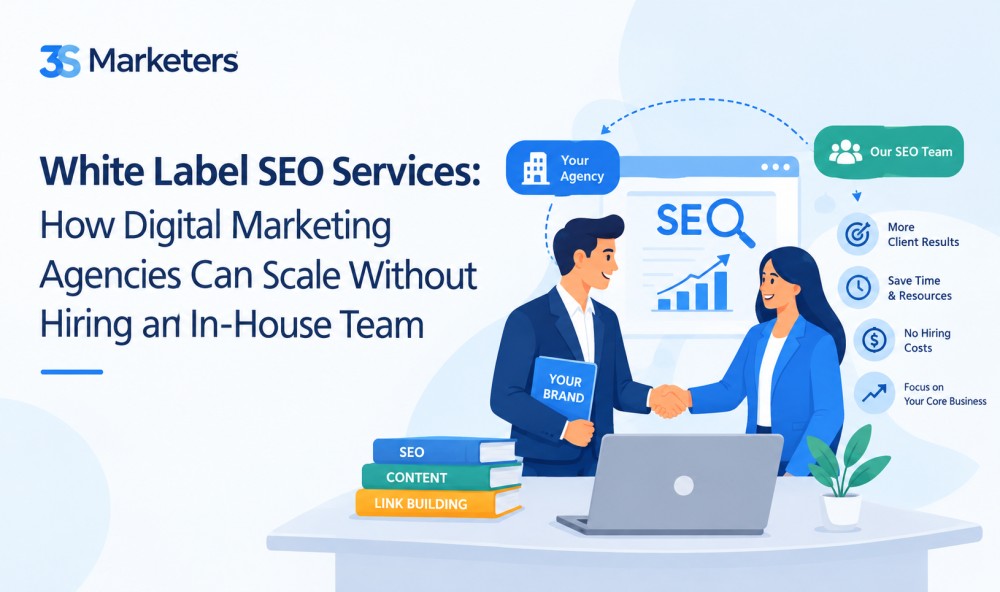
This is where white label SEO services can make a difference. They allow digital marketing agencies to outsource SEO fulfillment to an experienced provider while delivering the work under their own brand. Your agency maintains the client relationship, manages communication, and focuses on business development, while your fulfillment partner handles the agreed SEO activities behind the scenes.
For agencies looking to expand their service offerings without building a larger internal team, white label SEO offers a practical way to increase capacity, manage costs, and develop recurring revenue.
In this guide, we explain how white label SEO works, which services agencies can outsource, how to choose the right partner, and how to build a scalable delivery model.
What Are White Label SEO Services?
White label SEO services are search engine optimization solutions delivered by a third-party provider on behalf of another business. The provider performs the agreed work, while the agency resells those services under its own brand.
For example, a web design agency may build websites for small businesses but lack the resources to manage ongoing SEO campaigns. Instead of hiring an SEO specialist, the agency partners with a white label SEO provider to deliver keyword research, on-page optimization, technical audits, content support, and monthly reporting.
The agency remains the primary point of contact for its clients. Depending on the agreement, the fulfillment partner works entirely behind the scenes and supplies reports, recommendations, and deliverables that the agency can present under its own branding.
How Does a White Label SEO Partnership Work?
A typical partnership follows a straightforward process:
- The agency acquires the client: Your sales team identifies a business that needs SEO services.
- You define the scope: You agree on objectives, deliverables, timelines, and pricing with the client.
- The fulfillment partner executes the work: The provider performs the agreed SEO tasks.
- Your agency reviews the deliverables: You check the work, confirm that it meets your standards, and coordinate any revisions.
- You report to the client: You communicate progress and results under your agency’s brand.
This arrangement lets your agency offer SEO without maintaining every specialist role internally. However, your team should still oversee strategy, client expectations, quality assurance, and communication.
Why Digital Marketing Agencies Choose SEO Outsourcing
SEO requires a combination of technical knowledge, content development, keyword research, link acquisition, analytics, and ongoing optimization. Managing all these activities internally can become expensive, particularly when client demand changes from month to month.
SEO outsourcing for agencies offers an alternative to expanding the payroll every time the business wins new accounts.
1. Scale Without Increasing Headcount
Hiring an SEO manager, technical SEO specialist, content writer, and link-building specialist can require a substantial investment. Beyond salaries, agencies may need to cover recruitment, training, software subscriptions, and management time.
With outsourced SEO services, you can access additional delivery capacity when you need it. This can be especially useful when several clients launch campaigns at the same time or your agency experiences seasonal demand.
2. Reduce Operational Costs
An in-house SEO team creates fixed expenses even when workloads fluctuate. Outsourcing can help convert some of those fixed costs into more flexible service expenses.
The actual savings depend on your provider’s pricing, campaign complexity, and internal management requirements. Therefore, compare the full cost of outsourcing with the total cost of hiring rather than looking at salaries alone.
3. Offer More Services to Existing Clients
Your agency may already provide website design, paid advertising, branding, or social media marketing. Adding SEO creates an opportunity to offer existing clients a broader range of services without building every capability from scratch.
For example, a web design client may need ongoing technical maintenance, keyword targeting, content optimization, and organic traffic growth after launch. A white label partnership allows you to address these needs through your existing client relationship.
4. Focus on Sales and Client Relationships
Agency owners often spend too much time coordinating delivery and resolving operational problems. This can leave less time for prospecting, sales conversations, partnerships, and account expansion.
When a reliable provider manages agreed SEO tasks, your internal team can focus more on acquiring clients and strengthening relationships. The goal is not to remove your agency from service delivery, but to use your team’s time more effectively.
Which SEO Services Can Agencies Outsource?
A good white label SEO agency should offer services that match your clients’ requirements and your agency’s delivery model. The exact scope depends on your provider, campaign goals, and budget.
Technical SEO Audits
Technical SEO fulfillment can include website crawling, indexability checks, XML sitemap reviews, canonical tag analysis, redirect checks, broken-link identification, and Core Web Vitals assessments.
Your provider can supply prioritized recommendations and supporting documentation. Your agency can then coordinate implementation with its developers or the client’s technical team.
Keyword Research and On-Page SEO
Keyword research helps identify relevant search terms based on search intent, business objectives, and competition.
On-page SEO may include title tag optimization, meta descriptions, heading structure, internal linking, content recommendations, and page-level keyword mapping. These deliverables help ensure that optimization activities align with the purpose of each page.
SEO Content Development
Content support can include blog posts, service pages, location pages, content briefs, and updates to existing articles.
Your agency should establish editorial standards, approval processes, keyword priorities, and factual review requirements. Content should serve the target audience rather than exist solely to increase the number of published pages.
Link Building and Off-Page SEO
Depending on the provider, outsourced SEO fulfillment may include backlink analysis, relevant outreach, digital PR support, and link acquisition opportunities.
Ask how the provider identifies websites, evaluates relevance, and handles quality control. Avoid partners that promise guaranteed rankings or rely on manipulative link schemes.
Local SEO
For clients serving specific geographic areas, local SEO may include Google Business Profile optimization, local keyword research, citation consistency checks, location-page recommendations, and review strategy guidance.
Local SEO deliverables should reflect each client’s business model and service area rather than rely on identical work across every account.
SEO Reporting and Performance Analysis
Reporting may cover organic clicks, impressions, keyword visibility, landing-page performance, conversions, and completed activities.
Your provider should explain what the data means and distinguish completed tasks from measurable business outcomes. Rankings and traffic are useful indicators, but qualified leads, sales, and revenue are often more meaningful to clients.
White Label SEO Services vs. Hiring an In-House Team
Both models can work well. The right choice depends on your agency’s size, revenue stability, service requirements, and appetite for operational responsibility.
| Factor | White Label SEO Services | In-House SEO Team |
|---|---|---|
| Initial investment | Usually lower, depending on the agreement | Often higher due to recruitment and setup |
| Staffing flexibility | Easier to adjust outsourced capacity | Depends on hiring and workforce planning |
| Specialist access | Depends on the provider’s expertise | Depends on the skills you recruit |
| Brand control | Your agency can retain client-facing branding | Your agency controls delivery directly |
| Delivery oversight | Requires clear processes and partner management | Requires internal management and quality control |
| Capacity planning | Can expand through agreed partner resources | May require additional recruitment |
| Client communication | Usually managed by your agency | Usually managed by your agency |
| Long-term costs | Depend on contract terms and workload | Depend on salaries, tools, benefits, and overhead |
An in-house team may be the better option when you have stable demand, require daily direct collaboration, or need specialized expertise embedded deeply within your organization.
White label SEO may be more practical when you want to test demand, expand services quickly, or manage variable workloads without committing to multiple full-time hires.
Some agencies use a hybrid model: an internal SEO strategist or account manager oversees campaigns, while a specialist partner handles selected fulfillment tasks.
How to Choose the Right White Label SEO Agency
Your fulfillment partner directly affects your delivery quality, client satisfaction, and reputation. Choosing based on the lowest price alone can lead to missed deadlines, weak deliverables, and unnecessary account-management work.
Before signing an agreement, evaluate the following factors.
1. Review SEO Expertise and Work Samples
Ask for examples of audits, keyword research, content deliverables, and reports. Where possible, review relevant case studies and understand the work performed rather than relying solely on ranking claims.
Look for a partner that can explain its recommendations and adapt its approach to different industries, websites, and business objectives.
2. Confirm Branding and Confidentiality
Your provider should understand how white label delivery works. Confirm whether reports, documents, and communications can use your agency’s branding.
Discuss confidentiality, access permissions, data handling, and whether the provider will contact your clients directly. Put these expectations in writing before sharing client information.
3. Understand Pricing and Deliverables
Ask for a clear breakdown of included services, campaign limits, revision policies, additional charges, and turnaround times.
For example, a monthly package should specify whether it includes technical monitoring, content production, link-building activities, reporting, or implementation support. Clear deliverables make it easier to price your own packages accurately.
4. Check Communication and Reporting
A good provider should communicate delays, explain problems, and respond to reasonable questions within agreed timeframes.
Establish a regular reporting schedule and a process for handling urgent issues. Your account managers should receive enough information to explain the work confidently to clients.
5. Start With a Pilot Project
Before outsourcing a large portfolio, test the partnership with one suitable client or a limited set of deliverables.
Evaluate the quality of the work, communication, turnaround time, revision process, and overall cost. A small pilot helps you identify operational problems before they affect multiple accounts.
How to Build a Profitable White Label SEO Business Model
Outsourcing creates delivery capacity, but profitability still depends on how your agency prices, manages, and retains its clients.
Set Pricing Based on Total Delivery Costs
Calculate your provider’s fees alongside account management, client communication, quality assurance, sales costs, and any additional tools or implementation expenses.
For example, suppose your agency charges a client $1,000 per month for SEO and pays a fulfillment partner $500. The remaining $500 is the gross amount available to cover other delivery expenses and contribute toward profit.
That is a 50% gross margin against the fulfillment fee alone, not necessarily a 50% overall profit margin. Your actual profitability will depend on the additional costs of running the account and your business.
Standardize Your SEO Packages
Create clearly defined service packages for different client needs. You might offer a foundational package for smaller websites, a growth package for businesses investing in content and optimization, and a more comprehensive package for competitive markets.
Make sure each package has realistic deliverables and capacity limits. Avoid promising identical results across businesses with different competition levels, technical conditions, and budgets.
Establish a Repeatable Delivery Process
Document how your agency handles onboarding, access requests, audits, approvals, implementation, reporting, and renewals.
Use a shared task tracker or project management system to monitor deadlines and responsibilities. Standardized processes reduce confusion and help your team manage more clients without sacrificing quality.
Track Performance Beyond Rankings
Set clear expectations with clients before campaigns begin. Depending on their objectives, track organic traffic, qualified leads, conversion rates, revenue, and progress against agreed SEO milestones.
This gives your agency a stronger basis for explaining campaign value and identifying opportunities for improvement or service expansion.
Common Mistakes to Avoid When Outsourcing SEO
Even a capable fulfillment partner cannot compensate for unclear expectations or weak agency processes. Avoid these common mistakes:
- Choosing only on price: Extremely low fees may come with limited service scope, weak quality control, or unsuitable tactics.
- Selling unrealistic results: No provider can guarantee a specific Google ranking or timeline.
- Ignoring quality assurance: Review important deliverables before presenting them to clients.
- Failing to define responsibilities: Establish who handles strategy, implementation, approvals, and client communication.
- Overloading your provider: Confirm capacity before promising aggressive deadlines to multiple clients.
- Reporting tasks instead of outcomes: Explain how the work supports visibility, qualified traffic, and business goals.
A successful partnership requires clear expectations, consistent communication, and shared accountability for the quality of delivery.
Grow Your Agency With White Label SEO Services From 3S Marketers
Expanding your SEO offering does not have to mean building a large in-house team before you can accept new clients. With the right fulfillment partner, your agency can access specialist support, manage delivery more efficiently, and focus internal resources on sales, strategy, and client relationships.
3S Marketers provides white label SEO support for digital marketing agencies that want to expand their service capabilities while keeping their own brand at the center of the client relationship.
Whether you need help with technical SEO audits, keyword research, on-page optimization, content support, or ongoing campaign fulfillment, the first step is to define your clients’ needs and establish a delivery process that can scale.
If your agency is ready to explore SEO outsourcing, visit 3S Marketers to learn more about our services and discuss a potential white label partnership.
White Label SEO Services FAQs
How does a white label SEO agency work?
A white label SEO agency receives the project requirements, performs the agreed SEO activities, and supplies deliverables or reports to the partner agency. The partner agency reviews the work and presents it to the client under its own branding.
Are white label SEO services profitable?
They can be profitable when the agency's selling price covers fulfillment fees, account management, quality assurance, and other operating costs. Profitability depends on pricing, service scope, client retention, and delivery efficiency.
What is the difference between SEO outsourcing and white label SEO?
SEO outsourcing generally means hiring an external provider to perform SEO work. White label SEO adds a branding arrangement in which the agency resells the services under its own name and usually maintains the client-facing relationship.
Which SEO services can agencies outsource?
Agencies can outsource technical SEO audits, keyword research, on-page optimization, content development, link-building support, local SEO, and reporting. Availability varies by provider and package.
Will my clients know that I use a white label SEO provider?
Not necessarily. White label arrangements are designed to allow agencies to deliver services under their own branding. However, confidentiality, disclosure requirements, communication rules, and client agreements should be established clearly.
How do I choose the best white label SEO provider?
Evaluate the provider's expertise, work samples, deliverables, pricing, communication, reporting, confidentiality practices, and quality-control processes. Starting with a pilot project can help you assess whether the partnership meets your agency's requirements.
Can a small digital marketing agency benefit from SEO reseller services?
Yes. SEO reseller services can help smaller agencies offer additional services without immediately hiring a full SEO team. The model works best when the agency has a clear target market, realistic pricing, and a reliable process for managing clients and reviewing deliverables.