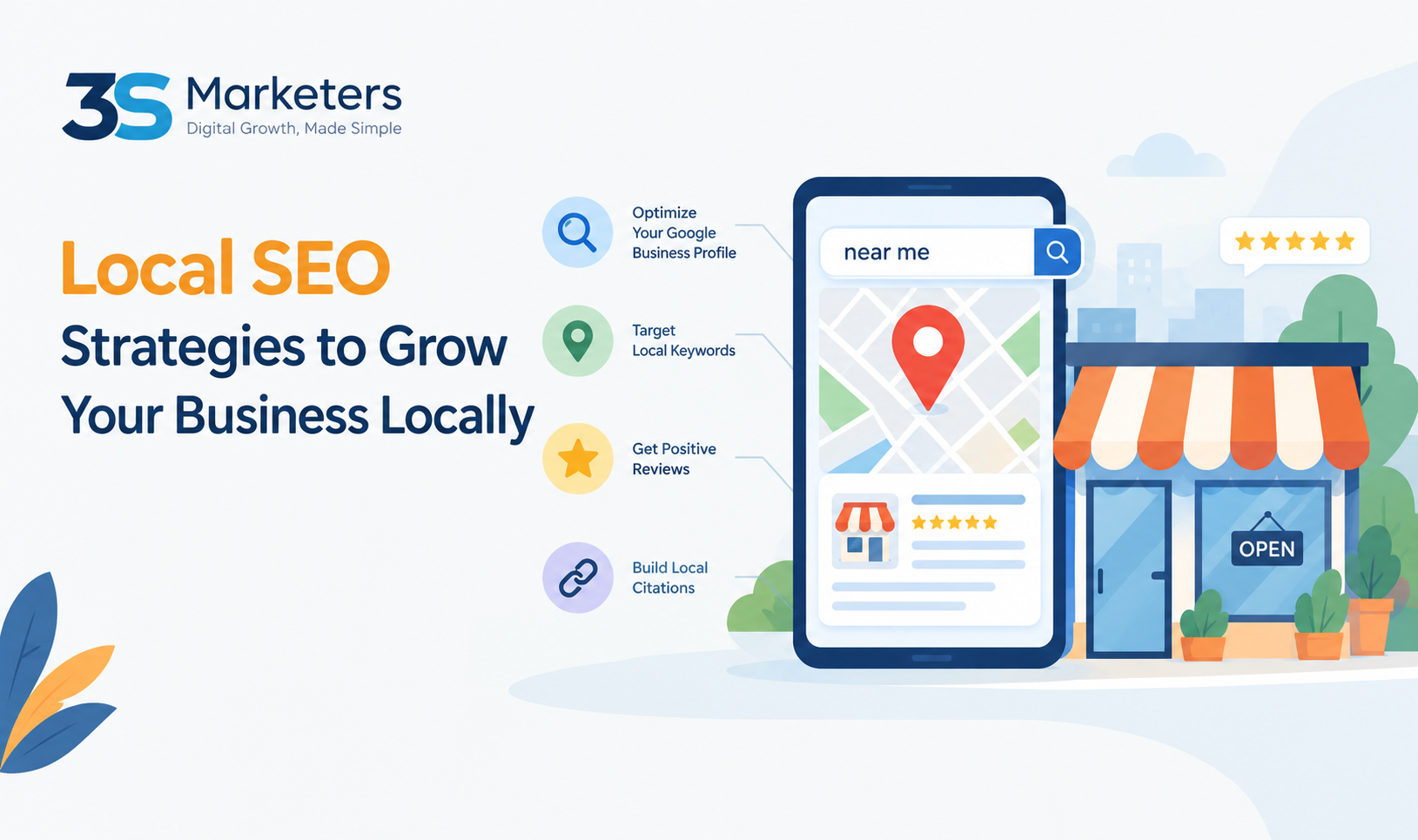
When customers search for a business, product, or service near them, appearing in local search results can make the difference between gaining a new customer and losing one to a competitor. This is where Local SEO becomes essential.
Local SEO helps businesses improve their visibility for location-based searches on Google and other search engines. Whether you operate a small local business, serve customers across multiple cities, or target markets such as Local SEO Canada and Local SEO USA, a well-planned local search strategy can help you attract highly relevant traffic and generate more leads.
However, local search optimization involves more than adding a city name to your website. It requires a combination of Local Keyword Research, optimized landing pages, Google Business Profile optimization, local content, citations, reviews, and Local SEO Link Building.
In this guide, we explore practical local SEO strategies that businesses can use to improve local visibility, reach nearby customers, and build sustainable organic growth.
What Is Local SEO?
Local SEO is the process of optimizing a website and online business presence to appear prominently in search results for queries connected to a specific geographic location.
For example, someone searching for:
- SEO company near me
- Digital marketing agency in Toronto
- SEO services in New York
- Local SEO agency in Vancouver
- Website development company in Dallas
is demonstrating local search intent.
Search engines use several signals to determine which businesses are most relevant, including location, relevance, website content, business information, reviews, links, and overall online authority.
A strong Local SEO strategy aligns these signals with the locations and services your business wants to target.
8 Effective Local SEO Strategies
1. Start With Local Keyword Research
Local Keyword Research should be the foundation of your local SEO campaign.
Instead of focusing only on broad keywords, identify search terms that combine your service with a location or demonstrate local intent.
For example:
| General Keyword | Local Keyword |
| SEO services | SEO services in Toronto |
| Digital marketing | Digital marketing agency in Chicago |
| Web design | Web design company in Vancouver |
| PPC services | PPC agency in New York |
Look for variations involving cities, states, provinces, neighborhoods, and “near me” searches.
You should also consider search intent. A person searching for “SEO agency Toronto” is likely much closer to making a business decision than someone searching for “what is SEO?”
Create keyword groups based on:
- Service
- City
- State or province
- Neighborhood
- Customer intent
- Industry
- Commercial relevance
This approach helps you build pages that match what potential customers are actually searching for.
2. Optimize Your Google Business Profile
Your Google Business Profile is one of the most important assets for local search visibility.
Make sure your business information is accurate and consistent, including:
- Business name
- Address
- Phone number
- Website
- Business category
- Opening hours
- Services
- Business description
Add high-quality images regularly and keep your services updated.
Customer reviews are equally important. Encourage genuine customers to leave detailed reviews describing their experience with your business.
Avoid purchasing or creating fake reviews. Instead, develop a simple process that makes it easy for satisfied customers to provide authentic feedback.
3. Build High-Quality Local SEO Landing Pages
Businesses serving multiple locations should create dedicated Local SEO Landing Pages when there is a genuine reason to target each location.
For example, an agency targeting the United States could create pages such as:
- SEO Services in New York
- SEO Services in Los Angeles
- SEO Services in Dallas
- SEO Services in Chicago
Similarly, businesses targeting Canada could create relevant pages for cities such as Toronto, Vancouver, Calgary, or Montreal.
However, avoid creating dozens of nearly identical city pages simply by replacing the city name.
Each landing page should provide unique and useful information, such as:
- Local customer needs
- Services available in the area
- Local market insights
- Relevant case studies
- Testimonials
- Location-specific FAQs
- Unique supporting content
- Clear calls to action
This creates a better experience for users while giving search engines meaningful location-specific content to understand.
4. Create Location-Focused Content
Content marketing can significantly strengthen Local SEO when it addresses topics relevant to your target market.
For example, an SEO agency targeting Canada could publish content around:
- SEO trends for Canadian businesses
- Local search marketing in Toronto
- SEO strategies for small businesses in Canada
- How Canadian businesses can improve Google visibility
For the U.S. market, content could focus on:
- Local SEO trends in the USA
- SEO for small businesses in New York
- Local search optimization for U.S. businesses
- How businesses can improve visibility in Google Maps
The goal isn’t to add locations artificially. Instead, create content that genuinely answers questions and solves problems for customers in those markets.
5. Invest in Local SEO Link Building
Local SEO Link Building helps establish your website’s authority and relevance within a geographic market.
Rather than focusing only on the number of backlinks, prioritize relevant and trustworthy websites.
Potential opportunities include:
- Local business directories
- Industry associations
- Local publications
- Regional business websites
- Chamber of commerce websites
- Local sponsorships
- Community organizations
- Relevant guest contributions
- Local partnerships
For example, a business targeting Toronto should ideally build relationships with relevant Canadian and Toronto-based websites instead of acquiring unrelated links from random websites.
Quality, relevance, and natural link acquisition should remain the priorities.
6. Keep NAP Information Consistent
NAP stands for Name, Address, and Phone Number.
Your business information should remain consistent across your website, Google Business Profile, directories, social profiles, and other business listings.
Even small inconsistencies can create confusion.
For example:
Business Name: 3S Marketers
Phone: +XX XXX XXX XXXX
Address: Correct and consistent business address
Regularly audit your business listings to identify outdated or incorrect information.
If your business changes its address, phone number, or business name, update important directories and profiles rather than leaving old information online.
7. Strengthen Internal Linking
Internal linking is an often-overlooked Local SEO strategy.
Your location pages should be connected logically to relevant service pages, blog posts, and other location pages where appropriate.
For example:
SEO Services → Local SEO → Toronto SEO Services → Local SEO Guide
This helps search engines discover and understand relationships between your pages.
Use descriptive anchor text instead of generic phrases such as “click here.”
Internal links can also help users move from informational content toward commercial pages, improving the overall conversion journey.
8. Optimize for Mobile and Local User Experience
Many local searches happen when users are already looking for a nearby business or service. A poor mobile experience can therefore cost potential leads.
Check that your website:
- Loads quickly
- Works properly on mobile devices
- Uses readable text
- Has easy-to-use navigation
- Provides clear contact information
- Includes visible calls to action
- Makes forms simple to complete
- Provides accurate location information
A visitor who searches for a service locally should be able to understand what you offer and contact you quickly.
Local SEO Canada vs. Local SEO USA
Local search strategies can vary depending on the market.
For Local SEO Canada, businesses may need to consider provinces, cities, Canadian directories, local search behavior, and region-specific terminology.
For Local SEO USA, location targeting can involve states, cities, counties, metropolitan areas, and neighborhoods.
The basic SEO principles remain similar, but the implementation should reflect the local market.
For businesses targeting both countries, avoid using one generic location page for everyone. Build a structured location strategy based on actual services, customer demand, and geographic priorities.
How to Measure Local SEO Performance
Implementing local SEO strategies without measuring results makes it difficult to determine what is working.
Monitor metrics such as:
- Local organic traffic
- Google Business Profile interactions
- Local keyword rankings
- Google Maps visibility
- Phone calls
- Form submissions
- Direction requests
- Organic conversions
- New customer inquiries
- Local backlinks
Don’t focus exclusively on rankings.
A keyword moving from position 8 to position 4 is useful, but increased qualified leads and customers are ultimately more important.
Common Local SEO Mistakes to Avoid
Some businesses unintentionally limit their growth by using outdated tactics.
Avoid:
- Creating duplicate city pages
- Keyword stuffing location names
- Buying low-quality backlinks
- Creating fake reviews
- Using inaccurate business information
- Ignoring mobile optimization
- Targeting locations where you don’t actually serve customers
- Publishing thin location pages
- Focusing only on rankings instead of conversions
A sustainable Local SEO campaign should prioritize relevance, usefulness, trust, and a positive user experience.
Conclusion
Local search provides businesses with an opportunity to reach customers when they are actively looking for products and services. But achieving consistent visibility requires more than simply adding a location to a page.
Effective local SEO strategies combine Local Keyword Research, Google Business Profile optimization, Local SEO Landing Pages, high-quality content, consistent business information, internal linking, and Local SEO Link Building.
Whether you’re targeting Local SEO Canada, Local SEO USA, or individual cities and neighborhoods, your strategy should be built around genuine customer needs and local search intent.
At 3S Marketers, we help businesses strengthen their organic visibility through strategic SEO, content optimization, local search, and digital growth strategies. With the right approach, Local SEO can become a reliable source of qualified traffic, leads, and long-term business growth.
Local SEO Strategies FAQs
Why is Local Keyword Research important?
Local Keyword Research identifies the terms customers use when searching for products or services in a specific location. It helps businesses create relevant pages and target searches with strong local intent.
How do Local SEO Landing Pages improve rankings?
Well-optimized Local SEO Landing Pages provide location-specific information that matches local search intent. They can help search engines understand which services a business provides in particular geographic areas.
Is Local SEO useful for businesses targeting multiple cities?
Yes. Businesses serving multiple cities can create dedicated location pages and content strategies for important service areas. Each page should contain genuinely useful, unique information rather than duplicated content.
What is Local SEO Link Building?
Local SEO Link Building involves earning relevant backlinks from websites connected to your industry or geographic market. Examples include local publications, business organizations, associations, and relevant directories.
How long does Local SEO take to show results?
The timeline varies depending on competition, website authority, location, industry, and the current state of your SEO. Some improvements may appear within a few weeks, while stronger organic visibility generally requires consistent optimization over several months.