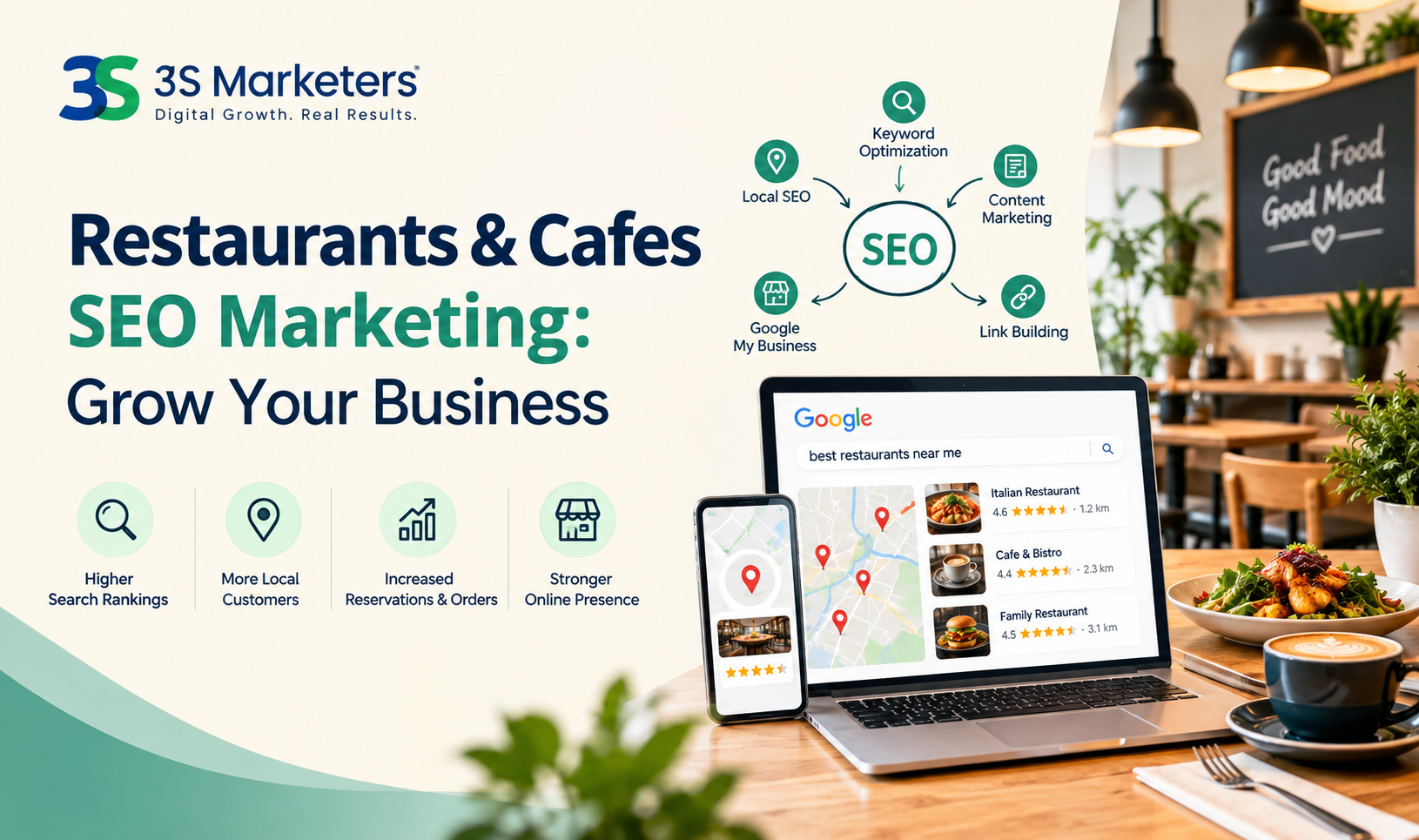
For restaurants and cafés, being discovered online can be just as important as serving great food. Today, customers often search Google before deciding where to eat. They may look for a restaurant nearby, compare menus and reviews, check opening hours, browse photos, or search for a café suitable for working or meeting friends.
This makes digital visibility a critical part of restaurant growth.
Effective Restaurants & Cafes SEO Marketing helps food businesses appear when potential customers are actively searching for places to eat. Instead of relying entirely on paid advertising or social media, SEO can create a sustainable source of organic traffic, reservations, calls, orders, and walk-in customers.
However, Restaurants & Cafes SEO requires more than adding keywords to a website. Restaurants and cafés need a combination of local SEO, Google Business Profile optimization, website improvements, menu optimization, review management, content marketing, technical SEO, and a strong mobile experience.
In this guide, we explore practical Restaurants & Cafes Marketing strategies that can help your business improve online visibility and turn searches into customers.
Why SEO Matters for Restaurants and Cafés
Restaurant-related searches often have strong purchase intent.
Consider searches such as:
- Best Italian restaurant near me
- Café near me
- Best restaurant in [city]
- Coffee shop near me
- Restaurants open now
- Best family restaurant nearby
- Rooftop restaurant in [city]
These searches are valuable because users are already looking for a place to eat.
A strong SEO strategy helps your restaurant or café appear at the right moment.
SEO can help you:
- Increase local search visibility
- Generate more website traffic
- Attract new customers
- Increase reservations
- Promote specific menu items
- Improve Google Maps visibility
- Generate phone calls
- Increase online orders
- Build long-term organic visibility
9 Effective Restaurants & Cafes SEO Marketing Strategies
1. Optimize Your Google Business Profile
Your Google Business Profile should be one of the first priorities in your Restaurants & Cafes SEO campaign.
When customers search for restaurants or cafés, Google frequently displays local businesses through Maps and local search results.
Make sure your profile includes accurate:
- Business name
- Address
- Phone number
- Website
- Opening hours
- Business category
- Menu URL
- Reservation information
- Services and attributes
Use high-quality photographs of your restaurant, food, seating areas, staff, and exterior.
Regularly update your profile with relevant posts, offers, events, and new menu information.
2. Build a Mobile-Friendly Restaurant Website
Many customers search for restaurants from their smartphones.
Your website should therefore provide a fast and convenient mobile experience.
Important elements include:
- Fast page speed
- Responsive design
- Easy navigation
- Click-to-call functionality
- Online reservation options
- Online ordering
- Easy-to-find address
- Embedded Google Maps
- Mobile-friendly menu
- Clear calls to action
A customer shouldn’t have to search through several pages to find your menu, phone number, location, or reservation option.
3. Optimize Your Menu for Search
Your menu is not only useful for customers—it can also contribute to SEO.
Avoid uploading your entire menu only as an image or PDF if the information cannot be easily crawled and understood by search engines.
Create HTML-based menu content where appropriate.
Optimize important menu pages around relevant search terms such as:
- Pizza restaurant
- Vegan restaurant
- Indian restaurant
- Seafood restaurant
- Specialty coffee
- Breakfast café
- Desserts
- Restaurant lunch menu
Include useful descriptions for popular dishes while keeping the content natural and customer-focused.
4. Target Local Restaurant Keywords
Local keyword targeting is one of the most important parts of Restaurants & Cafes SEO Marketing.
Instead of targeting only broad terms such as “restaurant” or “café,” identify location-specific searches.
For example:
Restaurant keywords:
- Restaurants in [city]
- Best restaurants in [city]
- Italian restaurants in [city]
- Family restaurants near me
- Fine dining restaurants in [location]
Café keywords:
- Cafés in [city]
- Best café near me
- Coffee shop in [location]
- Best coffee shop in [city]
- Breakfast café near me
Use these keywords naturally throughout relevant pages, titles, headings, descriptions, and content.
5. Create Location-Specific Landing Pages
If your restaurant business has multiple locations, create dedicated pages for each location.
For example:
- Restaurant in Downtown
- Restaurant in [City]
- Café in [Neighborhood]
- Coffee Shop in [City]
Each page should provide unique information about that location.
Include:
- Address
- Opening hours
- Parking information
- Nearby landmarks
- Menu
- Photos
- Location-specific FAQs
- Reservation information
- Customer reviews
- Directions
Avoid creating duplicate pages where only the city name changes.
Unique, useful location content provides much more value to both customers and search engines.
Restaurants & Cafes Marketing Through Content
6. Create Useful Food and Local Content
Content marketing can expand your restaurant’s visibility beyond your main service pages.
For example, a café could publish:
- Best coffee drinks for beginners
- Guide to choosing specialty coffee
- Best breakfast options in [city]
- How to choose the right coffee beans
- Best cafés for business meetings
A restaurant could create:
- Best dishes to try at an Indian restaurant
- Guide to vegetarian dining
- Best date-night restaurants in [city]
- Popular regional cuisines
- How to choose a restaurant for family dining
This type of content can attract customers earlier in their decision-making process.
7. Encourage and Manage Customer Reviews
Reviews have a major influence on restaurant decisions.
Customers want to know what other diners think before choosing where to eat.
Encourage satisfied customers to leave genuine reviews on platforms such as Google.
Respond professionally to both positive and negative feedback.
When responding to reviews:
- Thank customers for positive feedback
- Address concerns professionally
- Avoid arguing with customers
- Offer appropriate assistance when needed
- Keep responses natural and helpful
Never purchase fake reviews. Authentic customer experiences provide much more long-term value.
Restaurants & Cafes Digital Marketing
8. Combine SEO With Social Media
Restaurants & Cafes digital Marketing should not rely on a single channel.
SEO can capture customers actively searching, while social media can create awareness and engagement.
Restaurants and cafés can use platforms such as Instagram, Facebook, YouTube, and other relevant channels to promote:
- New dishes
- Seasonal menus
- Special offers
- Behind-the-scenes content
- Chef stories
- Customer experiences
- Events
- Restaurant ambiance
- Short food videos
Social content can also drive users back to your website, menu, reservation system, or ordering platform.
The strongest approach is to make SEO and social media work together rather than treating them as separate marketing activities.
9. Build High-Quality Local Backlinks
Backlinks can strengthen your website’s authority when they come from relevant and trustworthy sources.
Restaurants and cafés can explore opportunities such as:
- Local food blogs
- Restaurant directories
- City guides
- Tourism websites
- Local news websites
- Food publications
- Event websites
- Hospitality associations
- Local business organizations
For example, being featured in a respected local food guide can provide both referral traffic and SEO value.
Focus on relevance and quality rather than purchasing large numbers of low-quality links.
Technical SEO for Restaurants and Cafés
Technical SEO should not be ignored.
Make sure your website has:
- Clean URLs
- Proper title tags
- Optimized meta descriptions
- Correct heading structure
- XML sitemap
- Proper internal linking
- HTTPS security
- Mobile optimization
- Fast loading times
- Image optimization
- Structured data where appropriate
Restaurant businesses can also benefit from relevant structured data that helps search engines understand information about the business, menu, location, and other entities.
How to Measure Restaurants & Cafes SEO Performance
A successful SEO campaign should be measured using meaningful business metrics.
Track:
- Organic traffic
- Local keyword rankings
- Google Maps visibility
- Google Business Profile interactions
- Website calls
- Reservation clicks
- Menu views
- Online orders
- Direction requests
- New customers
- Organic conversions
Don’t focus only on traffic.
For a restaurant, 500 visitors who generate reservations or orders may be more valuable than thousands of visitors who never become customers.
Common SEO Mistakes Restaurants Should Avoid
Restaurants and cafés often make a few common SEO mistakes.
Using Only Social Media
Social media is valuable, but it shouldn’t replace your website and search visibility strategy.
Ignoring Google Business Profile
An incomplete or outdated business profile can limit your local visibility.
Using Images Instead of Text for Menus
Search engines may not fully understand important information contained only inside menu images.
Creating Duplicate Location Pages
Multiple pages with nearly identical content can provide little value to users.
Ignoring Reviews
Reviews influence both customer decisions and your local online presence.
Slow Mobile Websites
A slow website can frustrate hungry customers who want immediate information.
A Practical SEO Strategy for Restaurants & Cafés
A successful Restaurants & Cafes Marketing campaign should combine several activities rather than relying on one tactic.
Phase 1: Foundation
- SEO audit
- Google Business Profile optimization
- Keyword research
- Website optimization
- Mobile improvements
Phase 2: Content
- Service and menu pages
- Location pages
- Restaurant blogs
- FAQ content
- Local content
Phase 3: Authority
- Local citations
- Relevant backlinks
- Digital PR
- Food directory listings
- Local partnerships
Phase 4: Growth
- Conversion optimization
- Review generation
- Content expansion
- Local keyword expansion
- Performance analysis
This creates a sustainable framework for long-term search visibility.
Conclusion
Customers are increasingly using search engines to decide where they will eat, what they will order, and which restaurants and cafés they can trust. That makes online visibility an essential part of modern restaurant growth.
A successful Restaurants & Cafes SEO Marketing strategy combines local search optimization, Google Business Profile management, keyword research, mobile-friendly website design, menu optimization, reviews, content marketing, link building, and conversion optimization.
At 3S Marketers, we help businesses build strategic SEO and digital marketing campaigns designed to increase visibility, attract qualified customers, and support long-term growth.
Whether you operate a single neighborhood café or a growing restaurant chain, investing in Restaurants & Cafes SEO, Restaurants & Cafes Marketing, and Restaurants & Cafes digital Marketing can help turn online searches into real customers.
Restaurants & Cafes SEO Marketing FAQs
Why is SEO important for restaurants and cafés?
SEO helps restaurants and cafés appear when customers actively search for places to eat. It can increase local visibility, website traffic, calls, reservations, online orders, and visits.
What keywords should restaurants target?
Restaurants should target a combination of service, cuisine, location, and intent-based keywords, such as “Italian restaurant in [city],” “best café near me,” and “restaurants in [location].”
How can a restaurant improve Google Maps visibility?
Optimize your Google Business Profile, maintain accurate business information, collect genuine customer reviews, add quality photographs, select relevant categories, and maintain consistent information across online listings.
Does social media help Restaurants & Cafes SEO?
Social media can support digital marketing by increasing brand awareness, engagement, website visits, and content exposure. It works best alongside a dedicated SEO and local search strategy.
How long does Restaurants & Cafes SEO take to produce results?
SEO results vary depending on competition, location, website authority, and the current state of optimization. Some improvements may appear within weeks, while meaningful long-term growth generally requires consistent SEO work over several months.